
Florida doesn’t have snow, but it has salt air, summer heat, hurricane season and a dry winter, and each one asks something different of your garage door.
Once a month, test the auto-reverse with a 2×4 and look over the springs and cables. Each season, add the checks Florida’s weather calls for: clean tracks in spring, heat and seal checks in summer, storm inspections in fall and a professional tune-up in the dry winter months, when you can book one without a rush.
Before the seasonal lists, three quick habits do most of the work, and together they take about five minutes. Our troubleshooting and maintenance guide has the full monthly, quarterly and yearly schedule if you want the whole picture.
Lay a 2×4 flat on the floor where the door closes and run the door down. It should touch the board and reverse right away, which is the test the door industry recommends. If it stops and stays down, or crushes the board, keep people and pets clear of the door and call us, because the force settings or sensors need a technician.
From the floor, look at the spring above the door and the two cables running down the sides. A gap in the spring coil, frayed strands or rust you didn’t see last month all mean it’s time for a service call.
Open and close the door once and listen. New grinding, scraping or popping is the earliest warning you’ll get, and a part caught at that stage is usually a small repair.
Spring is Florida’s dry, pollen-heavy stretch and the last calm window before hurricane season, which makes it the best time to catch up on the jobs you put off.
Pollen, dust and leaves collect in the tracks over the dry months. Wipe the inside of both tracks with a dry rag and check that the rollers spin freely. Don’t grease the tracks, because grease holds the grit that wears rollers out.
Use a silicone-based garage door lubricant on hinges, rollers and the springs, plus the opener chain or screw if you have one. Skip WD-40, which cleans but doesn’t lubricate for long.
Press on the rubber seal along the bottom of the door. It should be soft and touch the floor all the way across, and if it’s cracked, flattened or missing a piece, replace it before summer storms push water under the door.
If your door hasn’t had a professional look in a year or more, May is the time. Our hurricane preparation guide explains what a storm-ready door needs.
Hurricane season starts on June 1, and the afternoon heat inside a closed Florida garage is hard on lubricant, rubber and the opener’s electronics.
Heat thins and dries lubricant faster than in cooler months. If the door starts squeaking or the rollers sound dry, lubricate again rather than waiting for the next season.
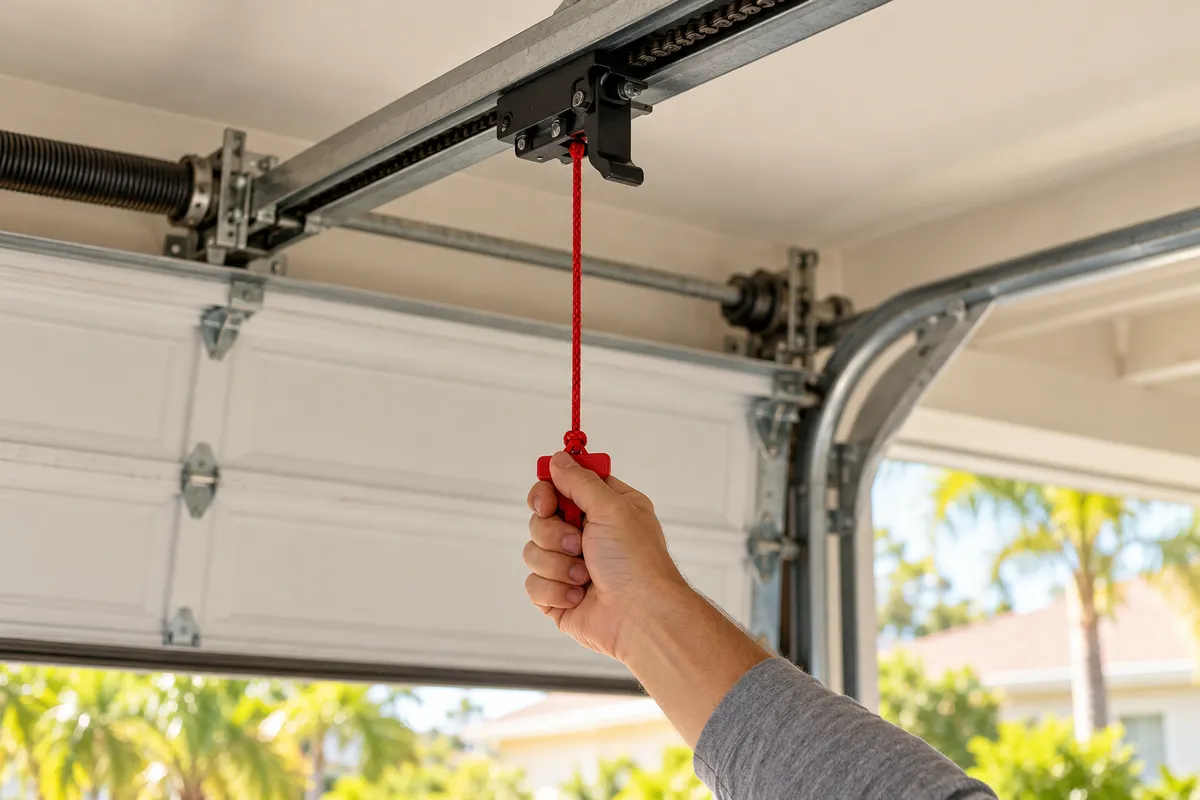
Practice pulling the emergency release cord so you know how to open the door by hand in a power outage, and if your opener has a battery backup, confirm it still holds a charge. The hurricane guide covers backup power for your opener in detail.
Sun and heat dry out the side and top weatherstripping, and gaps there let in rain and pests. Replace pieces that have gone hard or pulled away from the frame.
Early-morning or late-afternoon sun can shine straight into the safety sensors and stop the door from closing. Wipe both lenses and make sure their lights are steady, and if the door still refuses to close, we’ll realign and test both sensors.
September 10 is the statistical peak of the Atlantic hurricane season, and most storms form between mid-August and mid-October, so fall maintenance is mostly about wind, water and what a storm left behind.
Clear anything stored against the inside of the door, make sure the door closes fully and evenly, and lock it with the manual lock or slide bolt if you have one. If your door has a bracing kit, install it before the wind picks up, following the kit’s instructions.
Look at the door from outside before you run the opener. Dented or bowed panels, a door sitting crooked in its frame or a track pulled away from the wall can all fail the moment the opener pulls on them. If you see any of these, leave the door closed and call us, because a damaged door under spring tension isn’t safe to operate.
Storms carry salt spray far inland. Hose down the outside of the door and wipe the hinges and exposed hardware, then check for new rust on springs, cables and rollers.
Wind drives leaves, sand and small debris into the bottom of the tracks. Clean them out and run the door once to make sure it moves smoothly.
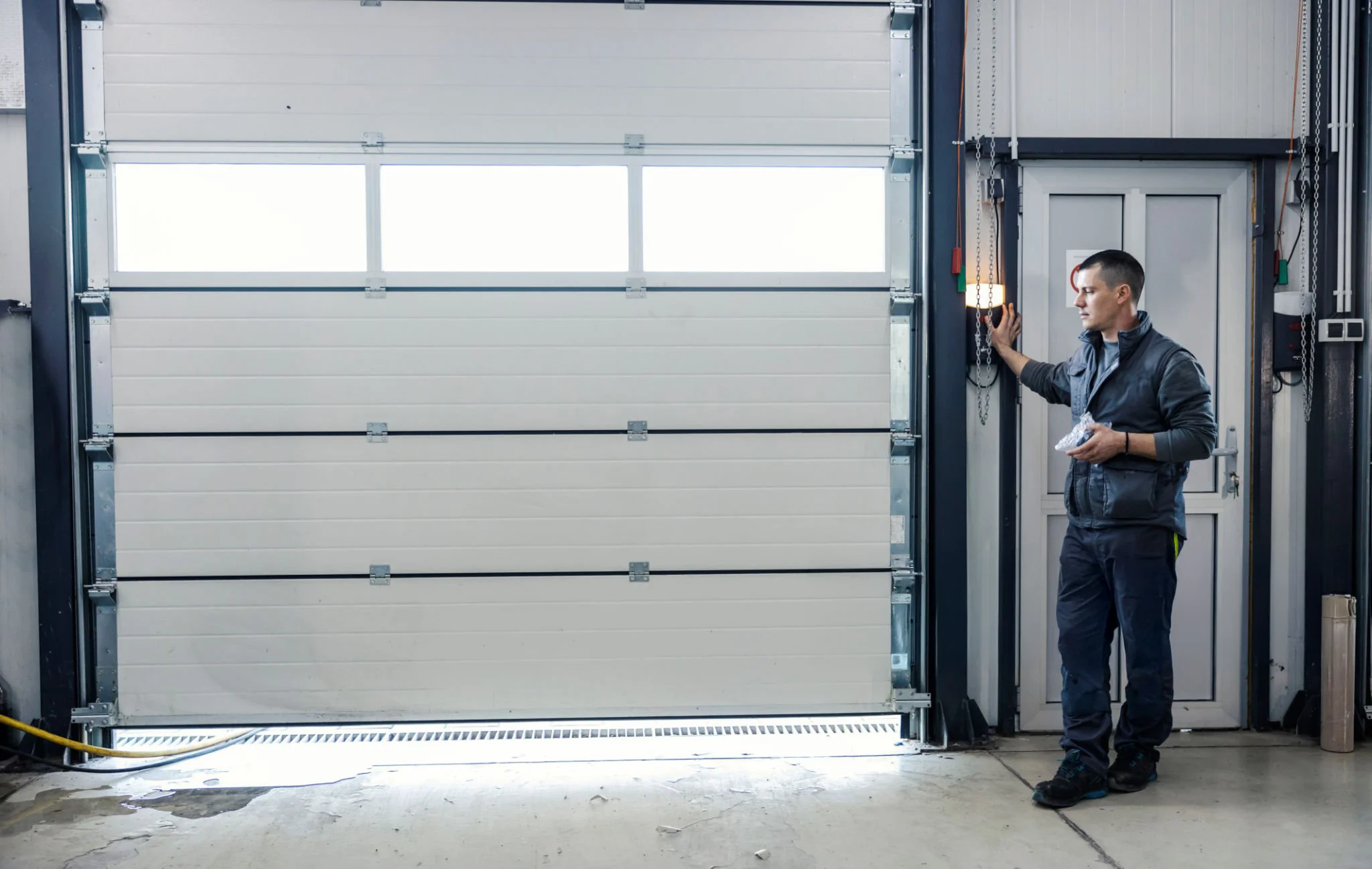
Winter is the mildest and driest stretch of the year in Florida, with no storms on the horizon, which makes it a comfortable season to book a tune-up or plan a bigger repair.
A yearly visit covers the jobs homeowners shouldn’t do, like checking spring tension, balancing the door and inspecting the cables and bottom brackets. Our garage door repair and maintenance service handles it, and if we find a worn part, we can usually replace it on the same visit.
With the door closed, pull the emergency release and lift the door by hand to about waist height. A balanced door stays where you leave it, and if it drops or shoots up, the springs need adjusting by a technician.
Replace remote batteries before they die and test the keypad. If a remote won’t pair after a battery change, our guide on how to program a garage door opener walks you through it.
A garage door maintenance checklist is meant to catch problems early, and some fixes on that list are dangerous without the right tools and training. These four are the ones we ask homeowners never to attempt.
Torsion and extension springs hold enough tension to lift a door that weighs well over a hundred pounds, and releasing that tension the wrong way causes serious injuries. The U.S. Consumer Product Safety Commission advises having a door that’s out of balance, binding or sticking serviced by a professional. See our spring repair service.
The bottom brackets connect to cables under full spring tension. Don’t loosen or tighten them, even when the rest of the hardware needs a turn of the wrench.
If the door fails the 2×4 test, the fix is a force or sensor adjustment followed by a new test, and that’s work for a technician.
A door that has jumped its track can fall. Keep it closed if you can, stay clear and call us.
Once a year by a technician, with your own monthly checks in between. If you live near the coast, check the springs and rollers for rust more often, since salt air speeds up corrosion.
A silicone-based garage door lubricant on hinges, rollers and springs. Avoid WD-40 and don’t grease the tracks.
Most of it, yes: cleaning the tracks, lubricating, checking the seals, testing the auto-reverse and replacing remote batteries. Springs, cables, bottom brackets and opener force settings should be left to a technician.
Look for dented or bowed panels, a crooked door and tracks pulling away from the wall before you run the opener. If anything looks off, keep the door closed and call for an inspection, because a damaged door can fail under spring tension.
A visible gap in the coil, a door that feels much heavier than usual or a door that won’t stay put halfway open. A loud bang from the garage almost always means a spring has broken.
We’ll check springs, cables, balance and the opener in one visit, start with a free estimate and replace most worn parts on the same visit.